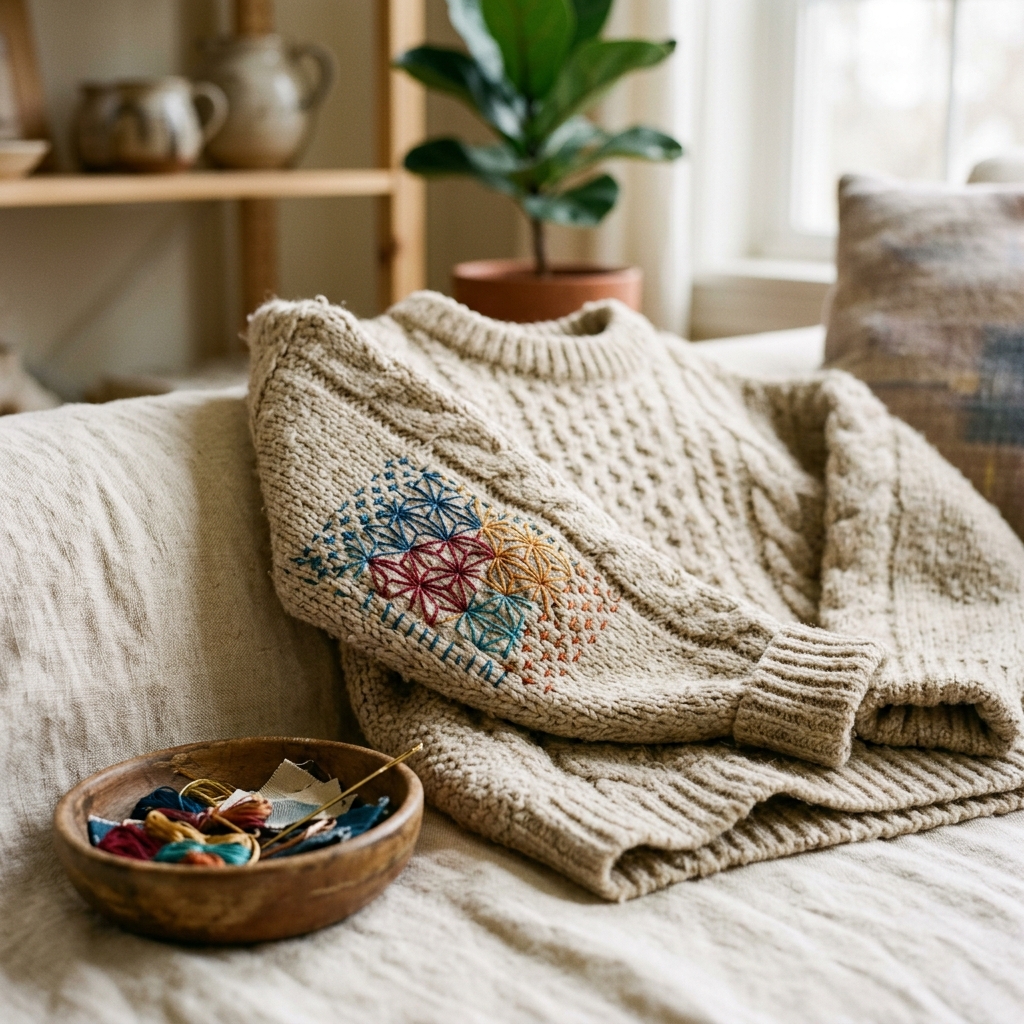
In 2026, the world of knitting has undergone a fundamental shift. We no longer just talk about the next big project, but about the lifecycle of what we create. Slow Fashion is no longer a niche; it is the backbone of modern handcraft.
What exactly is Slow Fashion in 2026?
It's about choosing materials with care, knitting garments that last beyond trends, and mastering the art of maintenance and repair so that clothes can be passed down through generations.
The Art of Celebrating Holes: Visible Mending
Previously, repairs were meant to be as invisible as possible. In 2026, the philosophy has been flipped. Inspired by the Japanese Sashiko technique and Kintsugi (the art of repairing ceramics with gold), Visible Mending has become a status symbol.
A beautifully mended hole with contrasting yarn tells a story of a garment that has been through a lot, and an owner who cares enough to give it a new life. This is where knitted garments truly shine – wool is one of the most rewarding materials to repair.
"Every stitch in a repair is a love letter to the garment and the environment."
The Capsule Knitting Wardrobe
Many knitters in 2026 are moving away from "stash-building" (an excess of yarn without purpose) and toward a curated capsule knitting wardrobe. This means:
- Multifunctional Garments: Sweaters that work just as well for everyday wear as for festive occasions.
- Timeless Cuts: Classic raglan and set-in sleeve constructions that fit perfectly year after year.
- Neutral Color Bases: Knitting in colors that can easily be combined with what you already own.
Focus on Material Quality
Sustainability in 2026 starts at the yarn shelf. We see a significant increase in demand for:
- Regenerative Wool: Wool from farms that actively work to sequester carbon and improve soil health.
- Recycled Fibers: Yarn spun from scraps from textile production or old wool garments.
- Plant-Dyed Yarn: Natural dyeing processes without the use of harsh chemicals.
How to Care for Your Knitted Garments
To ensure your 2026 projects last for decades, follow these golden rules. Many also use our Knitting Journal to keep track of when items were last washed or mended:
Air Out Rather Than Wash
Wool is naturally self-cleaning. Hang the garment out in fresh air overnight.
De-pilling
Use a lint comb or electric shaver regularly to keep the surface looking neat.
Flat Storage
Never hang knitted garments on a hanger – it ruins the shape.
Frequently Asked Questions about Knitting Trends 2026
Which colors are most popular in 2026?
We see a lot of earth tones, deep forest greens, and burnt orange tones, but also strong contrasts in repair details.
Is it difficult to learn visible mending?
Absolutely not! There are many free courses online, and the most important thing is not that it's perfect, but that it's functional and personal.